

What Type Of Muscle Has A Primary Purpose Of Animal Movement
The Animal Body: Bones Grade and Role
174 Animal Primary Tissues
Learning Objectives
By the stop of this section, yous volition be able to do the following:
- Describe epithelial tissues
- Discuss the dissimilar types of connective tissues in animals
- Depict three types of muscle tissues
- Describe nervous tissue
The tissues of multicellular, circuitous animals are four primary types: epithelial, connective, musculus, and nervous. Recollect that tissues are groups of like cells (cells carrying out related functions). These tissues combine to form organs—similar the pare or kidney—that have specific, specialized functions within the body. Organs are organized into organ systems to perform functions; examples include the circulatory system, which consists of the centre and blood vessels, and the digestive system, consisting of several organs, including the breadbasket, intestines, liver, and pancreas. Organ systems come together to create an entire organism.
Epithelial Tissues
Epithelial tissues cover the outside of organs and structures in the trunk and line the lumens of organs in a single layer or multiple layers of cells. The types of epithelia are classified by the shapes of cells nowadays and the number of layers of cells. Epithelia equanimous of a single layer of cells is called uncomplicated epithelia; epithelial tissue composed of multiple layers is chosen stratified epithelia. (Effigy) summarizes the different types of epithelial tissues.
| Unlike Types of Epithelial Tissues | ||
|---|---|---|
| Jail cell shape | Description | Location |
| squamous | flat, irregular round shape | simple: lung alveoli, capillaries; stratified: skin, mouth, vagina |
| cuboidal | cube shaped, central nucleus | glands, renal tubules |
| columnar | alpine, narrow, nucleus toward base; tall, narrow, nucleus along cell | simple: digestive tract; pseudostratified: respiratory tract |
| transitional | round, uncomplicated but appear stratified | urinary bladder |
Squamous Epithelia
Squamous epithelial cells are mostly round, flat, and have a small, centrally located nucleus. The cell outline is slightly irregular, and cells fit together to course a covering or lining. When the cells are arranged in a single layer (elementary epithelia), they facilitate diffusion in tissues, such every bit the areas of gas exchange in the lungs and the exchange of nutrients and waste matter at blood capillaries.
Squamous epithelia cells (a) have a slightly irregular shape, and a small, centrally located nucleus. These cells tin can be stratified into layers, every bit in (b) this human cervix specimen. (credit b: modification of piece of work past Ed Uthman; scale-bar data from Matt Russell)
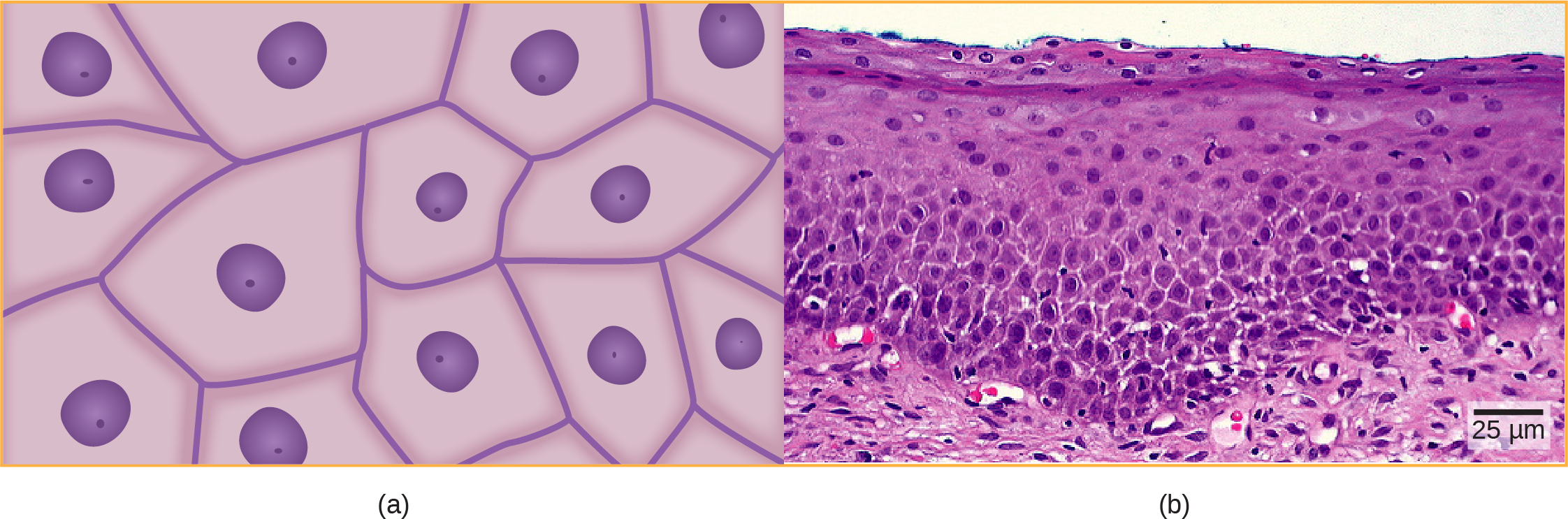
(Figure)a illustrates a layer of squamous cells with their membranes joined together to form an epithelium. Epitome (Figure)b illustrates squamous epithelial cells arranged in stratified layers, where protection is needed on the torso from outside abrasion and impairment. This is chosen a stratified squamous epithelium and occurs in the skin and in tissues lining the mouth and vagina.
Cuboidal Epithelia
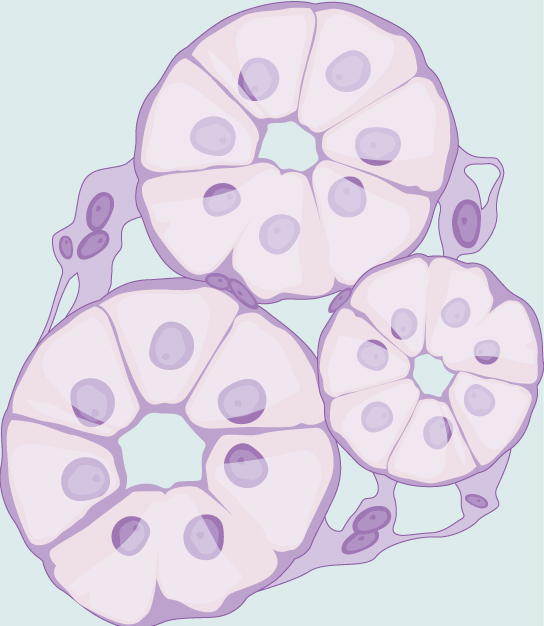
Cuboidal epithelial cells, shown in (Figure), are cube-shaped with a unmarried, central nucleus. They are most commonly found in a single layer representing a uncomplicated epithelia in glandular tissues throughout the body where they prepare and secrete glandular fabric. They are too plant in the walls of tubules and in the ducts of the kidney and liver.
Simple cuboidal epithelial cells line tubules in the mammalian kidney, where they are involved in filtering the blood.
Columnar Epithelia
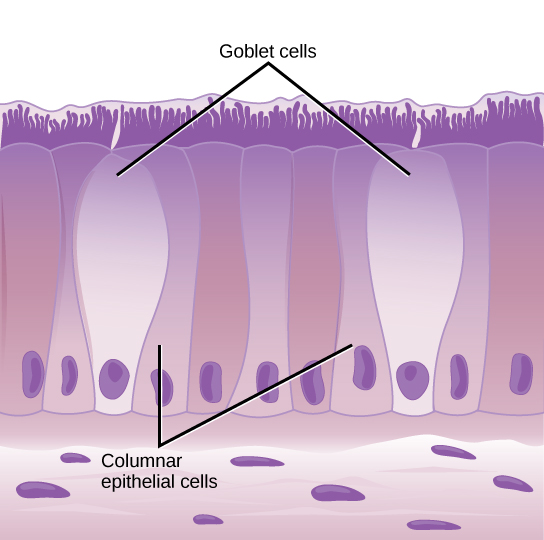
Columnar epithelial cells are taller than they are broad: they resemble a stack of columns in an epithelial layer, and are most commonly found in a single-layer arrangement. The nuclei of columnar epithelial cells in the digestive tract appear to be lined up at the base of the cells, as illustrated in (Figure). These cells absorb material from the lumen of the digestive tract and prepare information technology for entry into the body through the circulatory and lymphatic systems.
Simple columnar epithelial cells blot cloth from the digestive tract. Goblet cells secrete mucous into the digestive tract lumen.
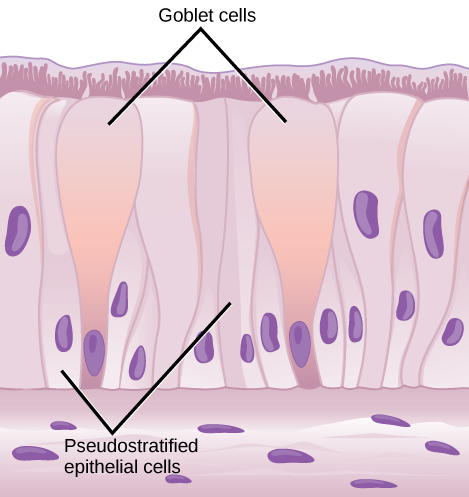
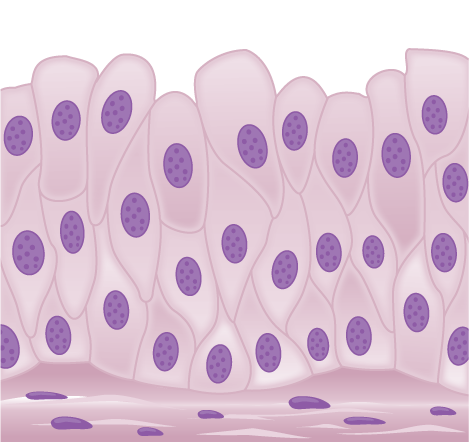
Columnar epithelial cells lining the respiratory tract appear to be stratified. Even so, each prison cell is attached to the base membrane of the tissue and, therefore, they are simple tissues. The nuclei are arranged at different levels in the layer of cells, making it appear as though there is more than than i layer, equally seen in (Effigy). This is chosen pseudostratified, columnar epithelia. This cellular covering has cilia at the apical, or costless, surface of the cells. The cilia raise the motility of mucous and trapped particles out of the respiratory tract, helping to protect the system from invasive microorganisms and harmful material that has been breathed into the body. Goblet cells are interspersed in some tissues (such as the lining of the trachea). The goblet cells contain mucous that traps irritants, which in the instance of the trachea go on these irritants from getting into the lungs.
Pseudostratified columnar epithelia line the respiratory tract. They exist in one layer, but the organization of nuclei at dissimilar levels makes it appear that there is more than than one layer. Goblet cells interspersed between the columnar epithelial cells secrete mucous into the respiratory tract.
Transitional Epithelia
Transitional or uroepithelial cells appear simply in the urinary system, primarily in the bladder and ureter. These cells are arranged in a stratified layer, but they accept the capability of appearing to pile up on summit of each other in a relaxed, empty bladder, as illustrated in (Figure). Every bit the urinary float fills, the epithelial layer unfolds and expands to hold the volume of urine introduced into it. As the bladder fills, it expands and the lining becomes thinner. In other words, the tissue transitions from thick to thin.
Visual Connection
Transitional epithelia of the urinary bladder undergo changes in thickness depending on how full the bladder is.
Which of the following statements about types of epithelial cells is false?
- Simple columnar epithelial cells line the tissue of the lung.
- Elementary cuboidal epithelial cells are involved in the filtering of blood in the kidney.
- Pseudostratisfied columnar epithilia occur in a single layer, simply the arrangement of nuclei makes it appear that more one layer is nowadays.
- Transitional epithelia change in thickness depending on how full the bladder is.
<!–<para>A–>
Connective Tissues
Connective tissues are made up of a matrix consisting of living cells and a nonliving substance, called the footing substance. The ground substance is made of an organic substance (normally a protein) and an inorganic substance (ordinarily a mineral or water). The master cell of connective tissues is the fibroblast. This cell makes the fibers constitute in nearly all of the connective tissues. Fibroblasts are motile, able to behave out mitosis, and tin can synthesize whichever connective tissue is needed. Macrophages, lymphocytes, and, occasionally, leukocytes can be found in some of the tissues. Some tissues have specialized cells that are not found in the others. The matrix in connective tissues gives the tissue its density. When a connective tissue has a high concentration of cells or fibers, information technology has proportionally a less dense matrix.
The organic portion or protein fibers constitute in connective tissues are either collagen, elastic, or reticular fibers. Collagen fibers provide force to the tissue, preventing information technology from being torn or separated from the surrounding tissues. Elastic fibers are made of the poly peptide elastin; this fiber can stretch to 1 and one one-half of its length and render to its original size and shape. Elastic fibers provide flexibility to the tissues. Reticular fibers are the third blazon of protein fiber constitute in connective tissues. This cobweb consists of sparse strands of collagen that form a network of fibers to support the tissue and other organs to which it is connected. The various types of connective tissues, the types of cells and fibers they are made of, and sample locations of the tissues is summarized in (Effigy).
| Connective Tissues | |||
|---|---|---|---|
| Tissue | Cells | Fibers | Location |
| loose/areolar | fibroblasts, macrophages, some lymphocytes, some neutrophils | few: collagen, rubberband, reticular | effectually blood vessels; anchors epithelia |
| dense, fibrous connective tissue | fibroblasts, macrophages | mostly collagen | irregular: peel; regular: tendons, ligaments |
| cartilage | chondrocytes, chondroblasts | hyaline: few: collagen fibrocartilage: large amount of collagen | shark skeleton, fetal bones, human ears, intervertebral discs |
| bone | osteoblasts, osteocytes, osteoclasts | some: collagen, elastic | vertebrate skeletons |
| adipose | adipocytes | few | adipose (fat) |
| blood | cherry-red blood cells, white blood cells | none | blood |
Loose/Areolar Connective Tissue
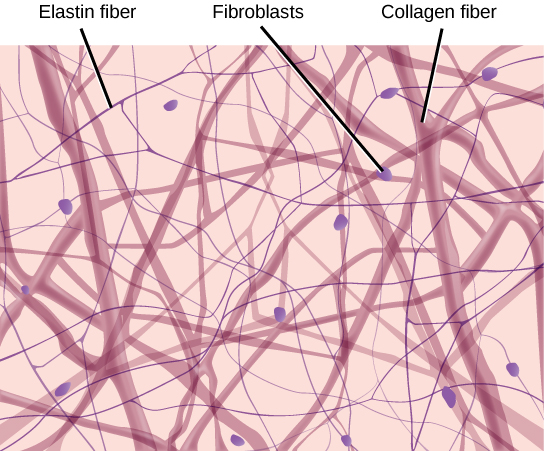
Loose connective tissue, also called areolar connective tissue, has a sampling of all of the components of a connective tissue. As illustrated in (Figure), loose connective tissue has some fibroblasts; macrophages are present equally well. Collagen fibers are relatively wide and stain a calorie-free pink, while elastic fibers are thin and stain dark blue to blackness. The infinite betwixt the formed elements of the tissue is filled with the matrix. The material in the connective tissue gives it a loose consistency similar to a cotton wool ball that has been pulled apart. Loose connective tissue is found around every blood vessel and helps to continue the vessel in place. The tissue is also institute around and between well-nigh body organs. In summary, areolar tissue is tough, all the same flexible, and comprises membranes.
Loose connective tissue is composed of loosely woven collagen and elastic fibers. The fibers and other components of the connective tissue matrix are secreted by fibroblasts.
Fibrous Connective Tissue
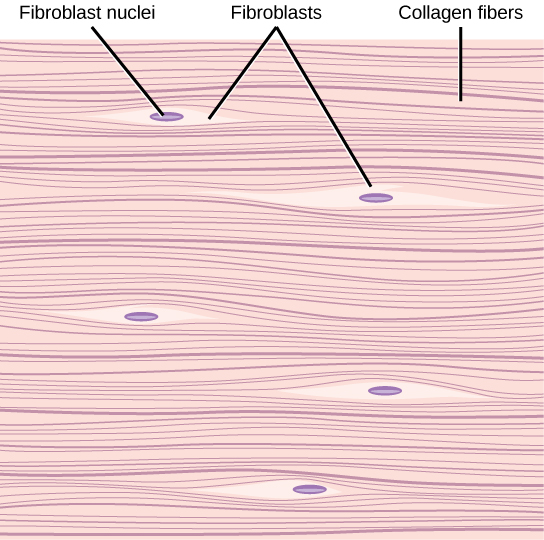
Fibrous connective tissues contain large amounts of collagen fibers and few cells or matrix cloth. The fibers can be arranged irregularly or regularly with the strands lined up in parallel. Irregularly arranged fibrous connective tissues are constitute in areas of the body where stress occurs from all directions, such every bit the dermis of the skin. Regular fibrous connective tissue, shown in (Figure), is found in tendons (which connect muscles to bones) and ligaments (which connect bones to bones).
Fibrous connective tissue from the tendon has strands of collagen fibers lined up in parallel.
Cartilage
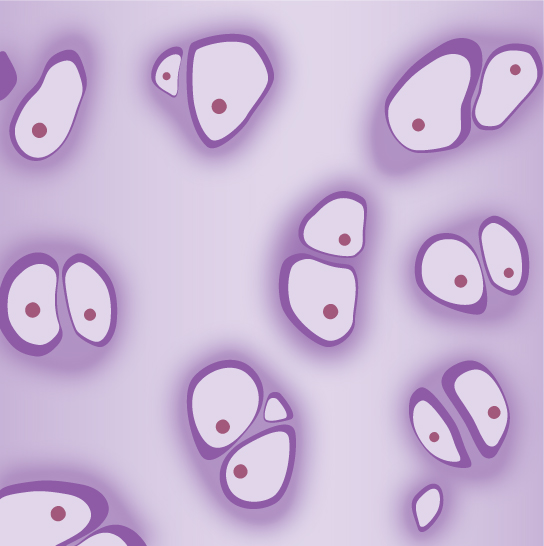
Cartilage is a connective tissue with a large amount of the matrix and variable amounts of fibers. The cells, chosen chondrocytes, brand the matrix and fibers of the tissue. Chondrocytes are plant in spaces within the tissue called lacunae.
A cartilage with few collagen and rubberband fibers is hyaline cartilage, illustrated in (Figure). The lacunae are randomly scattered throughout the tissue and the matrix takes on a milky or scrubbed advent with routine histological stains. Sharks have cartilaginous skeletons, as does about the entire human skeleton during a specific pre-birth developmental stage. A remnant of this cartilage persists in the outer portion of the human nose. Hyaline cartilage is also establish at the ends of long basic, reducing friction and cushioning the articulations of these bones.
Hyaline cartilage consists of a matrix with cells chosen chondrocytes embedded in it. The chondrocytes exist in cavities in the matrix called lacunae.
Elastic cartilage has a large amount of rubberband fibers, giving it tremendous flexibility. The ears of most vertebrate animals incorporate this cartilage as exercise portions of the larynx, or vocalism box. Fibrocartilage contains a large amount of collagen fibers, giving the tissue tremendous strength. Fibrocartilage comprises the intervertebral discs in vertebrate animals. Hyaline cartilage found in movable joints such equally the knee and shoulder becomes damaged equally a consequence of age or trauma. Damaged hyaline cartilage is replaced by fibrocartilage and results in the joints becoming "stiff."
Bone
Os, or osseous tissue, is a connective tissue that has a large corporeality of ii different types of matrix material. The organic matrix is similar to the matrix material establish in other connective tissues, including some amount of collagen and elastic fibers. This gives strength and flexibility to the tissue. The inorganic matrix consists of mineral salts—more often than not calcium salts—that give the tissue hardness. Without adequate organic material in the matrix, the tissue breaks; without adequate inorganic cloth in the matrix, the tissue bends.
In that location are three types of cells in bone: osteoblasts, osteocytes, and osteoclasts. Osteoblasts are active in making bone for growth and remodeling. Osteoblasts eolith bone material into the matrix and, after the matrix surrounds them, they proceed to alive, merely in a reduced metabolic state every bit osteocytes. Osteocytes are found in lacunae of the bone. Osteoclasts are active in breaking down os for bone remodeling, and they provide access to calcium stored in tissues. Osteoclasts are usually found on the surface of the tissue.
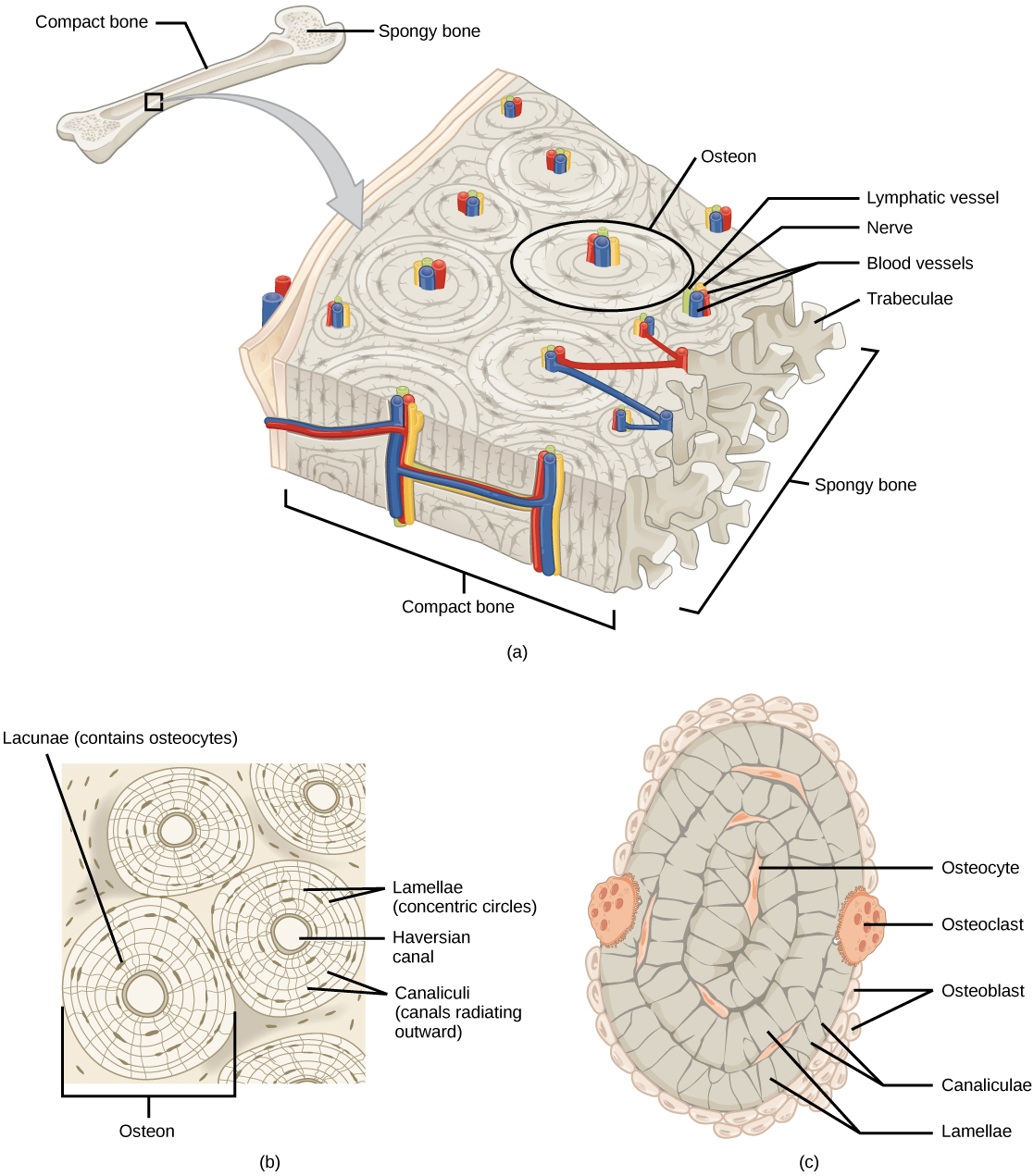
Bone can be divided into two types: compact and spongy. Compact bone is found in the shaft (or diaphysis) of a long os and the surface of the flat bones, while spongy bone is institute in the terminate (or epiphysis) of a long os. Compact bone is organized into subunits called osteons, as illustrated in (Figure). A blood vessel and a nerve are found in the center of the construction within the Haversian canal, with radiating circles of lacunae around information technology known as lamellae. The wavy lines seen betwixt the lacunae are microchannels chosen canaliculi; they connect the lacunae to assist diffusion betwixt the cells. Spongy bone is fabricated of tiny plates chosen trabeculae; these plates serve equally struts to requite the spongy bone strength. Over time, these plates can break causing the bone to become less resilient. Bone tissue forms the internal skeleton of vertebrate animals, providing structure to the brute and points of attachment for tendons.
(a) Compact os is a dense matrix on the outer surface of os. Spongy bone, inside the compact os, is porous with web-similar trabeculae. (b) Meaty bone is organized into rings chosen osteons. Claret vessels, nerves, and lymphatic vessels are plant in the central Haversian canal. Rings of lamellae surround the Haversian canal. Between the lamellae are cavities chosen lacunae. Canaliculi are microchannels connecting the lacunae together. (c) Osteoblasts surround the exterior of the os. Osteoclasts bore tunnels into the bone and osteocytes are found in the lacunae.
Adipose Tissue
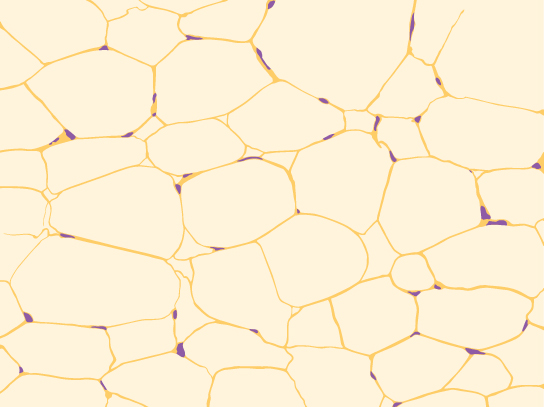
Adipose tissue, or fat tissue, is considered a connective tissue fifty-fifty though information technology does non have fibroblasts or a existent matrix and only has a few fibers. Adipose tissue is made up of cells chosen adipocytes that collect and store fat in the form of triglycerides, for energy metabolism. Adipose tissues additionally serve every bit insulation to help maintain body temperatures, assuasive animals to be endothermic, and they part as cushioning against damage to torso organs. Under a microscope, adipose tissue cells appear empty due to the extraction of fat during the processing of the textile for viewing, as seen in (Figure). The sparse lines in the image are the cell membranes, and the nuclei are the modest, black dots at the edges of the cells.
Adipose is a connective tissue is fabricated up of cells called adipocytes. Adipocytes have small nuclei localized at the cell edge.
Blood
Blood is considered a connective tissue because it has a matrix, as shown in (Figure). The living jail cell types are cherry-red blood cells (RBC), besides chosen erythrocytes, and white blood cells (WBC), likewise called leukocytes. The fluid portion of whole claret, its matrix, is normally called plasma.
Blood is a connective tissue that has a fluid matrix, called plasma, and no fibers. Erythrocytes (cherry blood cells), the predominant jail cell blazon, are involved in the transport of oxygen and carbon dioxide. Also present are diverse leukocytes (white blood cells) involved in immune response.
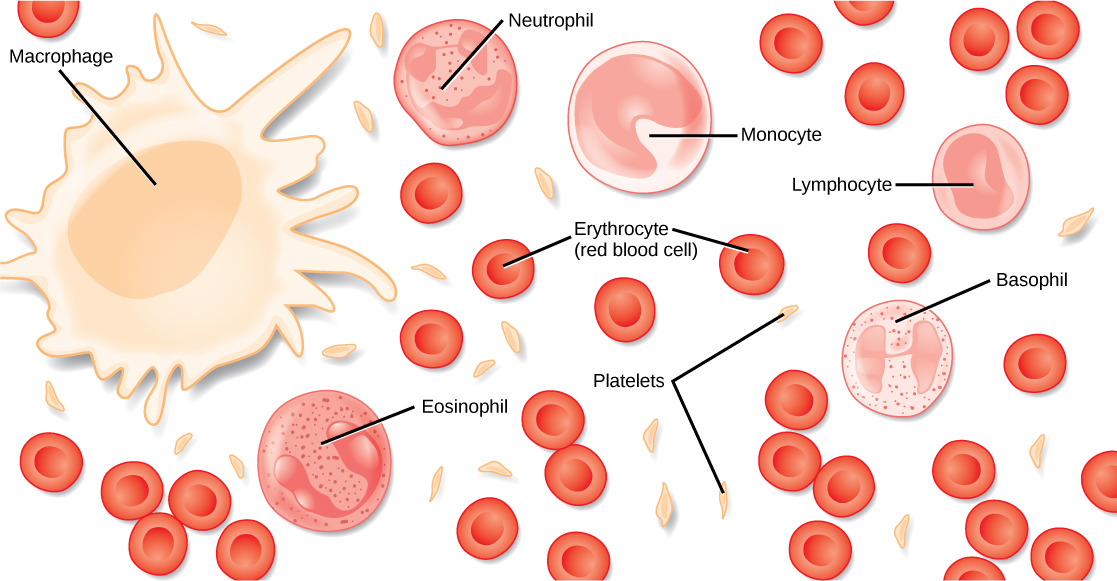
The cell found in greatest abundance in claret is the erythrocyte. Erythrocytes are counted in millions in a claret sample: the average number of cherry claret cells in primates is 4.7 to 5.five meg cells per microliter. Erythrocytes are consistently the same size in a species, but vary in size betwixt species. For example, the boilerplate diameter of a primate cherry-red blood cell is vii.5 µl, a dog is shut at 7.0 µl, but a true cat's RBC diameter is 5.9 µl. Sheep erythrocytes are even smaller at 4.6 µl. Mammalian erythrocytes lose their nuclei and mitochondria when they are released from the bone marrow where they are made. Fish, amphibian, and avian cherry-red blood cells maintain their nuclei and mitochondria throughout the cell's life. The principal job of an erythrocyte is to bear and deliver oxygen to the tissues.
Leukocytes are the predominant white claret cells found in the peripheral claret. Leukocytes are counted in the thousands in the claret with measurements expressed every bit ranges: primate counts range from 4,800 to ten,800 cells per µl, dogs from v,600 to nineteen,200 cells per µl, cats from viii,000 to 25,000 cells per µl, cattle from four,000 to 12,000 cells per µl, and pigs from xi,000 to 22,000 cells per µl.
Lymphocytes function primarily in the immune response to foreign antigens or cloth. Unlike types of lymphocytes make antibodies tailored to the foreign antigens and control the product of those antibodies. Neutrophils are phagocytic cells and they participate in one of the early lines of defence against microbial invaders, aiding in the removal of bacteria that has entered the body. Some other leukocyte that is found in the peripheral claret is the monocyte. Monocytes give rise to phagocytic macrophages that clean upwardly dead and damaged cells in the torso, whether they are foreign or from the host animal. Two additional leukocytes in the claret are eosinophils and basophils—both aid to facilitate the inflammatory response.
The slightly granular material amidst the cells is a cytoplasmic fragment of a prison cell in the bone marrow. This is chosen a platelet or thrombocyte. Platelets participate in the stages leading up to coagulation of the blood to stop haemorrhage through damaged claret vessels. Blood has a number of functions, merely primarily it transports material through the body to bring nutrients to cells and remove waste material from them.
Muscle Tissues
In that location are 3 types of muscle in animal bodies: smooth, skeletal, and cardiac. They differ past the presence or absence of striations or bands, the number and location of nuclei, whether they are voluntarily or involuntarily controlled, and their location within the body. (Figure) summarizes these differences.
| Types of Muscles | ||||
|---|---|---|---|---|
| Blazon of Muscle | Striations | Nuclei | Control | Location |
| smooth | no | single, in center | involuntary | visceral organs |
| skeletal | yes | many, at periphery | voluntary | skeletal muscles |
| cardiac | yes | single, in centre | involuntary | heart |
Polish Muscle
Polish musculus does not have striations in its cells. It has a single, centrally located nucleus, as shown in (Figure). Constriction of smooth muscle occurs nether involuntary, autonomic nervous control and in response to local conditions in the tissues. Smooth muscle tissue is also called not-striated as information technology lacks the banded appearance of skeletal and cardiac muscle. The walls of claret vessels, the tubes of the digestive organisation, and the tubes of the reproductive systems are equanimous of more often than not smooth muscle.
Smooth muscle cells practice not accept striations, while skeletal musculus cells do. Cardiac muscle cells accept striations, but, unlike the multinucleate skeletal cells, they have only 1 nucleus. Cardiac musculus tissue also has intercalated discs, specialized regions running along the plasma membrane that join adjacent cardiac muscle cells and assist in passing an electrical impulse from cell to prison cell.

Skeletal Muscle
Skeletal musculus has striations across its cells caused past the organization of the contractile proteins actin and myosin. These muscle cells are relatively long and have multiple nuclei along the edge of the cell. Skeletal musculus is under voluntary, somatic nervous system control and is found in the muscles that motility bones. (Figure) illustrates the histology of skeletal muscle.
Cardiac Muscle
Cardiac musculus, shown in (Figure), is found only in the heart. Like skeletal muscle, it has cantankerous striations in its cells, but cardiac muscle has a unmarried, centrally located nucleus. Cardiac musculus is not under voluntary control simply tin can be influenced by the autonomic nervous system to speed up or slow downwards. An added feature to cardiac musculus cells is a line than extends forth the finish of the prison cell every bit it abuts the next cardiac cell in the row. This line is called an intercalated disc: information technology assists in passing electrical impulse efficiently from ane prison cell to the side by side and maintains the potent connection between neighboring cardiac cells.
Nervous Tissues
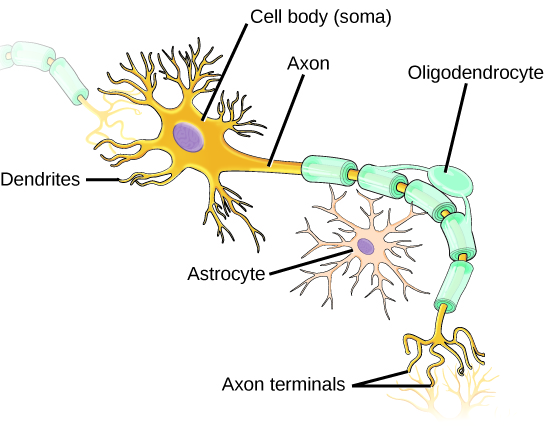
Nervous tissues are made of cells specialized to receive and transmit electrical impulses from specific areas of the torso and to send them to specific locations in the body. The main prison cell of the nervous system is the neuron, illustrated in (Figure). The large structure with a central nucleus is the cell body of the neuron. Projections from the jail cell body are either dendrites specialized in receiving input or a single axon specialized in transmitting impulses. Some glial cells are too shown. Astrocytes regulate the chemical environment of the nervus cell, and oligodendrocytes insulate the axon and then the electrical nervus impulse is transferred more efficiently. Other glial cells that are non shown support the nutritional and waste requirements of the neuron. Some of the glial cells are phagocytic and remove droppings or damaged cells from the tissue. A nerve consists of neurons and glial cells.
The neuron has projections called dendrites that receive signals and projections chosen axons that transport signals. Also shown are 2 types of glial cells: astrocytes regulate the chemical surround of the nerve jail cell, and oligodendrocytes insulate the axon so the electrical nerve impulse is transferred more efficiently.
Link to Learning
Click through the interactive review to learn more nigh epithelial tissues.
Career Connections
PathologistA pathologist is a medical doctor or veterinarian who has specialized in the laboratory detection of disease in animals, including humans. These professionals complete medical schoolhouse education and follow it with an extensive mail service-graduate residency at a medical center. A pathologist may oversee clinical laboratories for the evaluation of body tissue and claret samples for the detection of disease or infection. They examine tissue specimens through a microscope to identify cancers and other diseases. Some pathologists perform autopsies to determine the cause of decease and the progression of disease.
Section Summary
The bones edifice blocks of complex animals are four master tissues. These are combined to form organs, which take a specific, specialized function within the body, such every bit the skin or kidney. Organs are organized together to perform common functions in the form of systems. The four primary tissues are epithelia, connective tissues, muscle tissues, and nervous tissues.
Visual Connection Questions
(Figure) Which of the post-obit statements most types of epithelial cells is false?
- Simple columnar epithelial cells line the tissue of the lung.
- Simple cuboidal epithelial cells are involved in the filtering of blood in the kidney.
- Pseudostratisfied columnar epithilia occur in a single layer, merely the organization of nuclei makes information technology appear that more than than one layer is present.
- Transitional epithelia change in thickness depending on how full the bladder is.
(Figure) A
Review Questions
Which type of epithelial cell is best adapted to aid diffusion?
- squamous
- cuboidal
- columnar
- transitional
C
Which blazon of epithelial jail cell is found in glands?
- squamous
- cuboidal
- columnar
- transitional
B
Which type of epithelial cell is constitute in the urinary float?
- squamous
- cuboidal
- columnar
- transitional
D
Which blazon of connective tissue has the about fibers?
- loose connective tissue
- fibrous connective tissue
- cartilage
- bone
B
Which type of connective tissue has a mineralized different matrix?
- loose connective tissue
- fibrous connective tissue
- cartilage
- os
D
The prison cell constitute in bone that breaks information technology downwardly is chosen an ________.
- osteoblast
- osteocyte
- osteoclast
- osteon
C
The jail cell plant in bone that makes the os is called an ________.
- osteoblast
- osteocyte
- osteoclast
- osteon
A
Plasma is the ________.
- fibers in blood
- matrix of claret
- cell that phagocytizes bacteria
- cell fragment found in the tissue
B
The type of muscle cell under voluntary control is the ________.
- smoothen muscle
- skeletal muscle
- cardiac musculus
- visceral muscle
B
The part of a neuron that contains the nucleus is the
- cell torso
- dendrite
- axon
- glial
A
Why are intercalated discs essential to the function of cardiac musculus?
- The discs maintain the barriers between the cells.
- The discs pass nutrients betwixt cells.
- The discs ensure that all the cardiac muscle cells beat as a single unit of measurement.
- The discs command the heart rate.
C
Disquisitional Thinking Questions
How tin can squamous epithelia both facilitate improvidence and prevent damage from abrasion?
Squamous epithelia can be either simple or stratified. Every bit a single layer of cells, it presents a very thin epithelia that minimally inhibits diffusion. Every bit a stratified epithelia, the surface cells can be sloughed off and the cells in deeper layers protect the underlying tissues from damage.
What are the similarities between cartilage and bone?
Both contain cells other than the traditional fibroblast. Both accept cells that social club in spaces inside the tissue called lacunae. Both collagen and rubberband fibers are found in bone and cartilage. Both tissues participate in vertebrate skeletal development and formation.
Multiple sclerosis is a debilitating autoimmune disease that results in the loss of the insulation around neuron axons. What prison cell type is the immune system attacking, and how does this disrupt the transfer of messages past the nervous system?
In multiple sclerosis, the immune system attacks the oligodendrocytes. The expiry of oligodendrocytes results in the loss of the insulating sheath effectually the axon of the neurons. When the sheath is gone, the electric impulses travel much more slowly downwards the length of the axon.
When a person leads a sedentary life his skeletal muscles atrophy, but his polish muscles do not. Why?
Skeletal muscles are involved in voluntary motion, then the person has to make the choice to work those muscles through practice or motility. Smooth muscles are involved in involuntary activities of the torso (ex. blood vessel expansion and contraction, intestinal peristalsis) so they are active fifty-fifty when a person is sedentary.
Glossary
- canaliculus
- microchannel that connects the lacunae and aids improvidence between cells
- cartilage
- type of connective tissue with a big amount of footing substance matrix, cells called chondrocytes, and some corporeality of fibers
- chondrocyte
- jail cell institute in cartilage
- columnar epithelia
- epithelia fabricated of cells taller than they are wide, specialized in absorption
- connective tissue
- type of tissue fabricated of cells, ground substance matrix, and fibers
- cuboidal epithelia
- epithelia made of cube-shaped cells, specialized in glandular functions
- epithelial tissue
- tissue that either lines or covers organs or other tissues
- fibrous connective tissue
- type of connective tissue with a high concentration of fibers
- lacuna
- space in cartilage and bone that contains living cells
- loose (areolar) connective tissue
- blazon of connective tissue with small amounts of cells, matrix, and fibers; institute around blood vessels
- matrix
- component of connective tissue fabricated of both living and nonliving (ground substances) cells
- osteon
- subunit of compact os
- pseudostratified
- layer of epithelia that appears multilayered, but is a simple roofing
- unproblematic epithelia
- single layer of epithelial cells
- squamous epithelia
- type of epithelia fabricated of flat cells, specialized in aiding diffusion or preventing abrasion
- stratified epithelia
- multiple layers of epithelial cells
- trabecula
- tiny plate that makes upward spongy bone and gives information technology strength
- transitional epithelia
- epithelia that can transition for actualization multilayered to unproblematic; as well called uroepithelial
Source: https://opentextbc.ca/biology2eopenstax/chapter/animal-primary-tissues/
Posted by: holladaywillith.blogspot.com
0 Response to "What Type Of Muscle Has A Primary Purpose Of Animal Movement"
Post a Comment